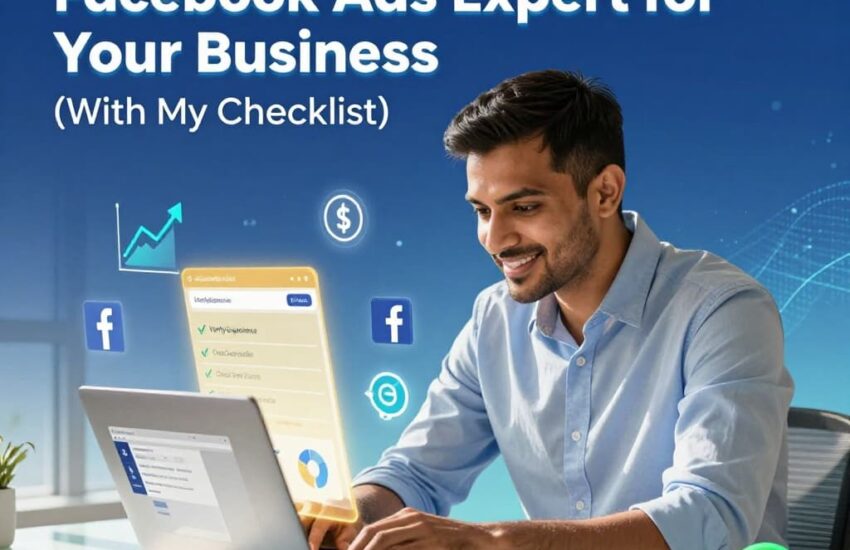
Hiring a Facebook Ads expert is weirdly hard because the work can look “fine” on the surface. Ads are running. Spend is flowing. Reports are full of numbers. But profit stays flat, lead quality drops, or results swing every week for no clear reason.
I see the same pattern in accounts I review: money wasted on random tests, “optimization” that is really just toggling settings, and hiring decisions based on confidence instead of competence. The worst part is you often realize it too late, after the learning has reset and the budget is gone.
This post gives you a simple checklist you can use today to hire with more clarity. It is built around what actually moves performance in 2026: creative volume, clean signals, and a process that protects profitable winners. I’ve reviewed enough ad accounts to know what quietly breaks results, even when the dashboard looks pretty.
Key Takeaways (Read This First)
- A real expert ties ads to your offer, funnel, and unit economics (not just clicks and ROAS).
- You can spot deal-breaker red flags before you sign, if you ask the right questions.
- My checklist helps you vet proof, process, tracking, and communication in one call.
- In 2026, scaling usually comes from better creative and better signal quality, not narrow targeting tricks.
- Pixel plus Conversions API is not “extra.” It is table stakes.
What A Real Facebook Ads Expert Does (And What They Should Never Skip)
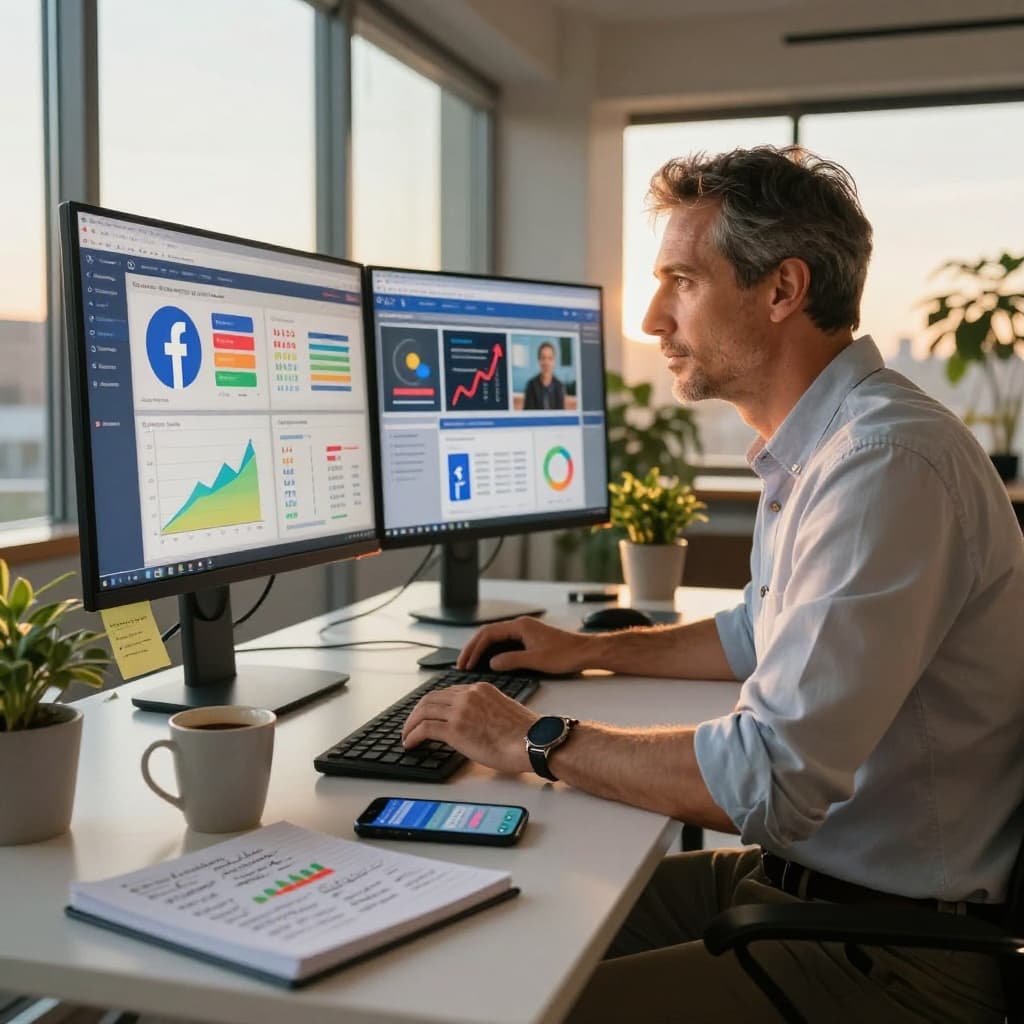
The job is not “launching campaigns.” The job is creating a repeatable system to buy customers at a cost your business can afford.
Week 1: I want an audit of the account, the landing pages, and tracking. They should ask for numbers you do not see inside Ads Manager: margin, AOV, lead to sale rate, refunds, sales cycle length, capacity, and what counts as a good customer. If they do not ask, they are guessing with your money.
Week 2: They should launch controlled tests, not a total rebuild “because my structure works.” Good testing starts where leverage lives: offer clarity, landing page friction, and creative angles. Most accounts do not need 12 campaigns. They need 6 stronger ads and a cleaner conversion signal.
Monthly: They should run a steady rhythm: new creatives shipped, winners protected, losers cut, and a short report that explains decisions. ROAS screenshots are easy to cherry-pick. I care more about whether they can explain what caused the change, and what they are doing next.
They think in funnels and offers, not just ads
A Facebook Ads expert should connect your business goal to the right message and stage of awareness.
- Ecommerce example: Prospecting ads lead with a clear product angle that fits your margins (not just “50% OFF” panic). Retargeting uses proof: reviews, UGC, before and after, comparisons, FAQs, and objections.
- SaaS or services example: Top-of-funnel might be a short value video or lead magnet, then retargeting moves people toward a demo, consult, or trial with case studies and “why us” proof.
Before scaling, they should ask about AOV, LTV, gross margin, and capacity. If you cannot fulfill, support, or close more volume, scaling spend can actually create problems.
They build a testing system for creatives, audiences, and budgets
In 2026, creativity is usually the biggest lever. Targeting still matters, but creative does more “sorting” than most people want to admit. A simple baseline I like:
- Smaller accounts: 3 to 6 new creatives per week.
- Bigger spend: you often need 10+ per week across formats and angles.
And by “new,” I mean real variation: new hooks, new concepts, new objections, new creators, new formats (UGC, founder POV, demos, carousels, static). Not tiny edits to the same ad.
They should also understand when Advantage+ and flexible creative make sense (often for scale), and when a more manual setup is useful (like isolating a high-intent retargeting offer or protecting a very specific funnel step). “Always Advantage+” and “Never Advantage+” both sound like someone who stopped learning.
They protect tracking and attribution so Meta can learn
Meta’s algorithm can only optimize based on what it can reliably see. If tracking is sloppy, the platform learns the wrong thing. At minimum, a Facebook Ads expert should verify:
- Pixel installed correctly and firing the right events
- Domain verification and event priority aligned with your goal
- Conversions API (CAPI) set up to recover lost signal
- Deduplication working (so events are not double-counted)
- UTMs that make sense in GA4 or your analytics tool
This does not need to be overly technical. It just needs to be correct.
Expert Vs Agency Vs Freelancer: How To Pick The Right Setup For Your Stage
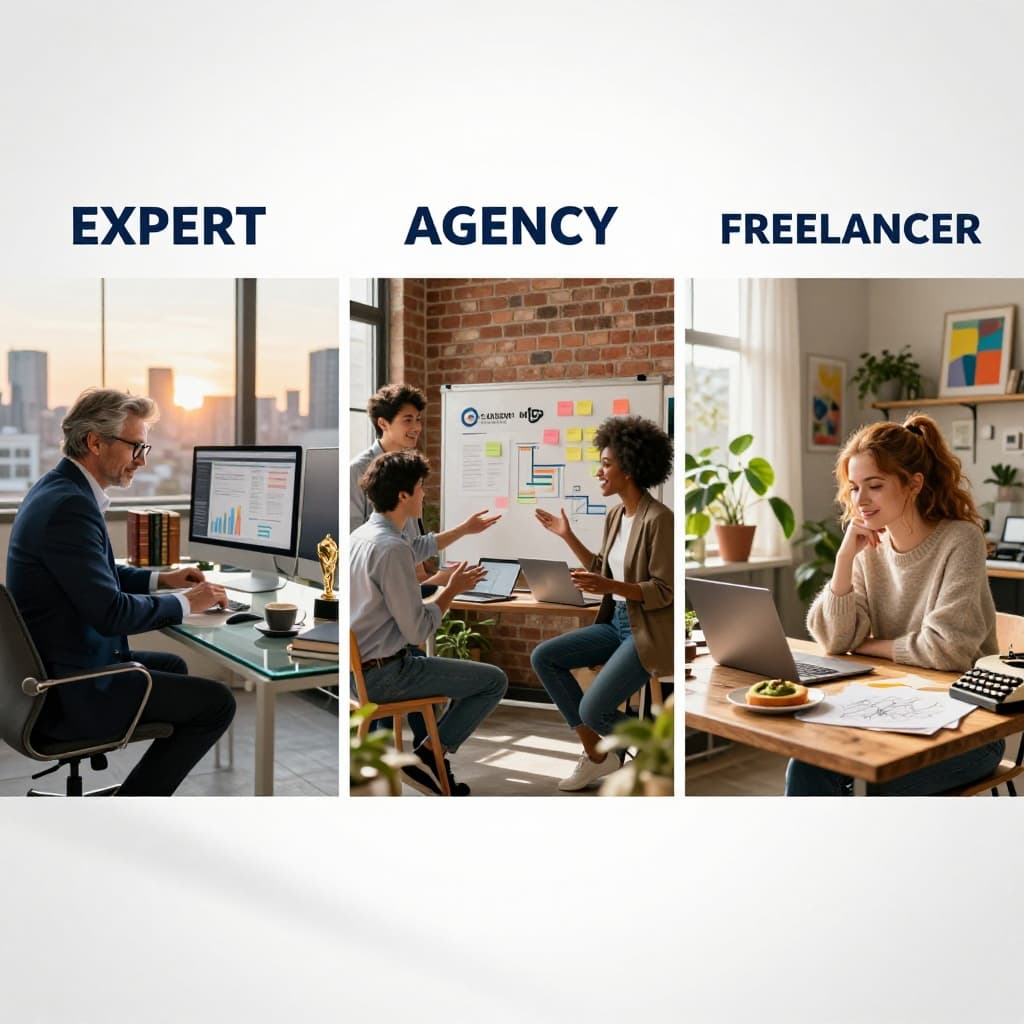
There is no perfect option. The best setup depends on how complex your funnel is, how fast you need to move, and how much senior attention you want.
Freelancers can be great when you find someone disciplined and responsive. Agencies can work when you truly need a team and you confirm who is doing the day-to-day work. A solo expert model is often best for founders who want one accountable operator and fewer handoffs.
A quick comparison table you can screenshot
| Option | Best for | Typical monthly fee (ranges) | Pros | Watch-outs |
|---|---|---|---|---|
| Freelancer | Lower spend, simpler funnels | $800 to $3,000 | Flexible, can be very specialized | Process may be light, availability varies |
| Solo expert | Founder-led growth, senior attention | $2,500 to $8,000 | Direct ownership, faster decisions | Limited capacity, needs clear scope |
| Agency | Higher spend, multi-channel needs | $5,000 to $20,000+ | Team coverage, broader skills | Juniors may run execution, slower iteration |
(These ranges vary by spend, creative workload, and tracking complexity.)
My Proven Checklist For Hiring A Facebook Ads Expert (Use This Before You Sign Anything)
I use this list because it forces real answers. It also makes it hard for someone to hide behind confidence, jargon, or cropped screenshots.
Results you can verify (not vanity metrics)
1. Ask: “Can you walk me through one client result, start to finish, with spend and timeframe?”
Good: They share budget range, dates, what they changed, and what improved (CPA, MER, contribution profit, lead quality).
Bad: One ROAS screenshot with no context.
2. Ask: “What did you optimize for, and how did you measure success outside Ads Manager?”
Good: They talk about blended efficiency (MER), profit, qualified leads, close rate, payback period, or LTV.
Bad: “ROAS is all that matters.”
3.Ask: “What was not working at first, and what did you do about it?”
Good: They can name the problem (weak offer, low conversion rate, bad event, creative fatigue) and the fix.
Bad: “It just worked because we know the platform.”
4. Ask: “Can you share references or do an anonymous account walkthrough?”
Good: They offer a call, a screen share with sensitive details hidden, or real references.
Bad: They refuse every option and only provide testimonials with no substance.
A clear process for audits, testing, and scaling
5. Ask: “Do you start with an audit? What do you look at first?”
Good: Tracking, funnel drop-offs, offer clarity, creative library, account history, and constraints (margin, capacity).
Bad: “We rebuild everything on day one.”
6. Ask: “What does your first 30 days look like, week by week?”
Good: A plan you can picture: fix signals, launch controlled tests, weekly creative drops, review cadence.
Bad: Vague talk about “optimizing and scaling.”
7. Ask: “How do you decide what to test first?”
Good: They prioritize highest impact: offer and landing page friction, then creative angles, then structure tweaks.
Bad: They start with tiny settings changes (placements, exclusions, micro-targeting) before fixing basics.
8. Ask: “How do you scale budgets without breaking performance?”
Good: Clear guardrails (step-ups on stable winners, watching blended metrics, creative refresh timing).
Bad: “We just double it when it looks good.”
Platform knowledge that matters in 2026 (Meta AI, Advantage+, CAPI)
9. Ask: “When do you use Advantage+ and broad targeting, and when do you go manual?”
Good: They explain how they feed the system: strong creatives, clean events, and enough conversion volume.
Bad: They sell “secret interests” or act like Advantage+ is magic.
10. Ask (litmus test): “How do you improve signal quality when tracking is messy?”
Good: Pixel and CAPI checks, event match quality, deduplication, priorities, and fixing the conversion goal.
Bad: “We’ll just target interests again.”
Communication, reporting, and ownership (so you are never in the dark)
11. Ask: “What will you send me each week?”
Good: A short update: what we tested, what won, what lost, what we learned, and what is next.
Bad: A dashboard link with no decisions.
12. Ask: “Who owns creative and landing page changes?”
Good: Clear responsibilities (who briefs, who edits, who approves, deadlines).
Bad: “We run ads, you figure out the rest” (then they blame your site forever).
13. Ask: “Do I keep full ownership and access?”
Good: You have admin access to the ad account and Business Manager, plus naming conventions and documentation.
Bad: They want to run everything in their account or restrict access.
Related Article : How to Choose the Right Facebook Ads Agency for Your Business.
Red Flags That Tell Me To Walk Away Fast
These are the fastest “no’s” for me:
The quickest “no” signals I look for in the first call
- We guarantee 5x ROAS (nobody can guarantee that).
- We do not need your margins or backend numbers (then they cannot manage profit).
- No audit needed, we will rebuild right away (usually reckless).
- We only run one structure for every business (lazy).
- We will fix performance by narrowing targeting (dated thinking in 2026).
- You do not need access, we will handle it (you should own your assets).
How Much A Facebook Advertising Expert Costs (And What Actually Drives The Price)
Most pricing falls into three bands: freelancers ($800 to $3,000 per month), solo experts ($2,500 to $8,000), and agencies ($5,000 to $20,000+). Common models are flat fee, percent of spend, or a hybrid.
Price usually tracks workload. Higher spending needs more creativity, more testing, and tighter reporting. Multiple offers, multiple funnels, and tracking cleanup also raise the work.
Cheap often costs the most. If someone burns two months of budget while “learning,” the low fee stops looking low.
Related Article : Meet the Top 5 Facebook Ads Experts.
When It Is Time To Hire A Meta Ads Expert (And When Diy Is Still Fine)
DIY can be smart when you are still proving the offer or you cannot produce creativity consistently. It is also fine when spending is small and you are learning quickly.
It is usually time to hire when product-market fit is clearer and your bottleneck is execution: you cannot keep up with testing, your tracking is unclear, or you are making guesses every week. As a rough guide, many teams look for help around $3,000 to $10,000 per month in ad spend, or when paid social becomes a meaningful growth channel.
Quick self-check: are you making confident decisions weekly, or reacting to noise?
Why Some Businesses Choose To Work With Me As Their Facebook Ads Expert
Most people come to me after they tried an agency, a junior buyer, or a “guru” who could talk but could not run a steady system.
I start with an audit, then build a testing routine that keeps creative moving. I care about tracking hygiene because Meta’s AI needs clean signals to do its job. And I keep reporting simple: what changed, what we learned, and what we do next.
If you want results you can explain, not just screenshots, that is the kind of work I like doing.
FAQ: Quick Answers Before You Hire
How do I know if you are the right Facebook Ads expert for my business?
I’m a fit if you have a real offer, a budget that supports testing, and the ability to approve or produce new creative weekly. Tracking does not need to be perfect, but I need access to fix it. If your goal is steady improvement with clear decisions, start with an audit or consult.
How long does it take to see results from Meta ads?
Small wins often show up in 2 to 4 weeks, especially from fixing tracking and tightening creative. More stable gains usually take 6 to 12 weeks because testing needs time to find repeatable winners. The learning phase is real, so timelines depend on conversion volume and how fast you can ship new creative.
Do you offer a free Facebook Ads audit or consultation?
I can do an initial consultation to see if there is a clear path to improvement. To make it useful, come prepared with the last 30 to 90 days of results, your margins, and your main goal (profit, CAC, or qualified leads). If you can share access safely, the call becomes more concrete.
Conclusion
Picking the right Facebook Ads expert is mostly about avoiding expensive guesswork. Look for proof you can verify, a process you can follow, platform skill that matches 2026, and communication that makes decisions obvious. Use the checklist above before you sign anything. If you want a second set of eyes, book a consultation or request an audit. The goal is simple: stop wasting time, get clarity fast, and build results you can repeat.
&media=https://jaymehta.co.in/wp-content/uploads/2026/01/Facebook-Ads-expert.jpg)